
Heavy equipment
A megawatt charger that drives to the excavator
DIMAAG shipped Komatsu a 20-ton-class electric excavator and a mobile charger. The idea is to store power overnight, then deliver it during breaks.
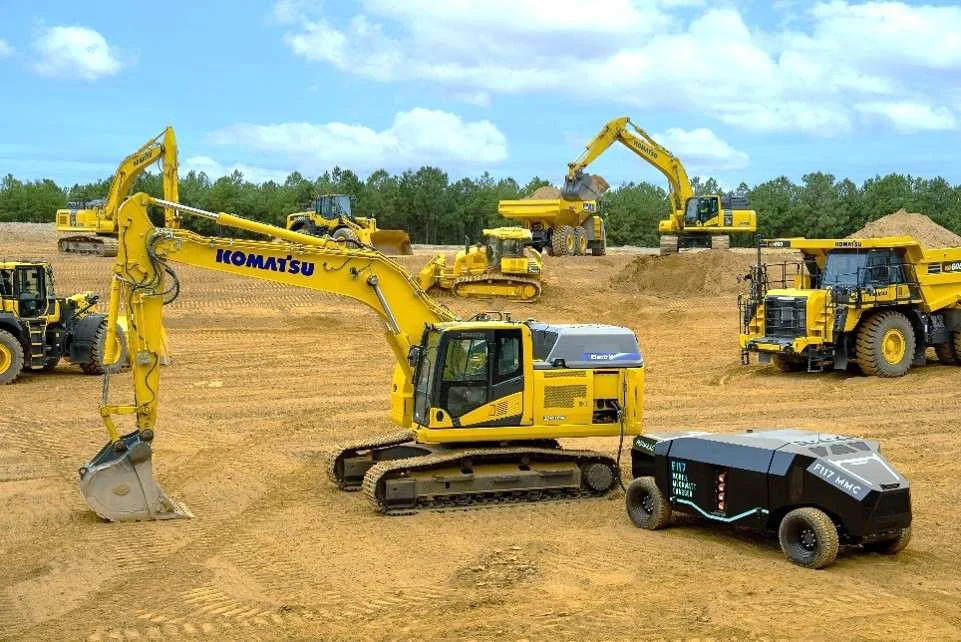
DIMAAG says it has shipped Komatsu a 20-ton-class electric excavator fitted with its electrification technology, together with a self-propelled Mobile Megawatt Charging System. Komatsu is launching proof-of-concept tests. That is the milestone here: equipment delivered for testing, not a fleet-wide commercial rollout.
The interesting number is not just the charger output. It is the 30-100 kW of grid power that DIMAAG describes as available at some sites. Its approach is to charge the mobile system at that rate overnight, then deliver megawatt-scale power to the machine during work breaks.
Move the stored energy, not the excavator
The charging unit is self-propelled and all-wheel-drive. In the setup DIMAAG describes, the unit can travel to the machine rather than requiring the excavator to return to a fixed charging point. The excavator and the charger are separate pieces of the same proposed workflow.
That distinction matters when reading the announcement. The site connection and the power delivered during a charging session are not the same number. The mobile system stores energy first. A megawatt-scale output claim does not mean the overnight grid connection is also a megawatt.
What is known, and what still needs testing
The collaboration was first shown at bauma 2025. DIMAAG identifies Ian Wright as its chief technology officer and a Tesla co-founder. Komatsu chief technology officer Taisuke Kusaba describes the next step as proof-of-concept testing. Neither detail turns the shipment into a published performance result.
The source notes do not give a verified charging-session duration for this delivery. They also do not establish daily production, long-term reliability or a measured operating-cost saving. Those numbers stay out of this story. Older demonstration footage should not be mistaken for footage of the newly shipped unit.
Our take
This is worth following because it puts the charging plan beside the machine, rather than treating it as a later problem. The useful follow-up will be test results showing how overnight energy collection and work-break charging fit together. Until then, the shipment and the proposed charging workflow are the story.
More reporting →